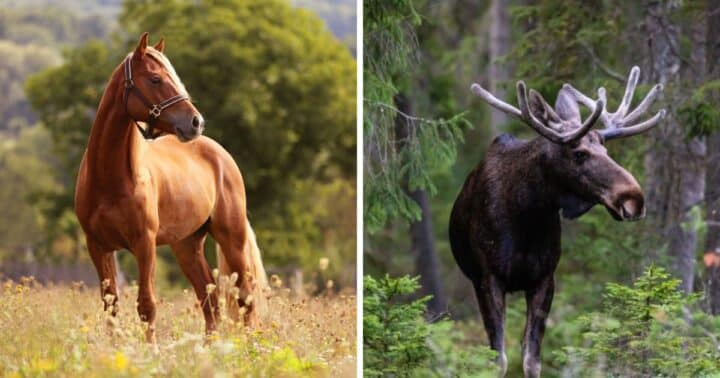
Moose vs Human: A Size Showdown
In a battle of strength and size, the majestic moose takes on the average human in a showdown that's as fascinating as it is humbling. From towering antlers to razor-sharp hooves, the moose boasts a physical presence that dwarfs its human opponent. But what exactly makes a moose so big, and how does it compare to the average human in terms of size and strength? In this article, we'll delve into the world of moose physiology and pit them against their human counterparts in a size showdown that will leave you in awe.
The average moose stands between 5.5 and 7.6 feet (1.7 to 2.3 meters) tall at the shoulder, with a length of up to 8.2 feet (2.5 meters) and a weight of around 800 to 1,500 pounds (360 to 680 kilograms). In contrast, the average adult human stands at around 5.9 feet (1.8 meters) tall and weighs around 154 pounds (70 kilograms). But it's not just size that sets moose apart – their physical strength is also impressive. A moose can weigh as much as a small car and generate a force of up to 1,800 pounds (820 kilograms) per square inch with its hooves.
So, how does the average human compare to the moose in terms of physical strength? According to a study published in the Journal of Experimental Biology, the average human male can generate a force of around 300 pounds (136 kilograms) per square inch with their hand. While that's still a respectable amount of strength, it's significantly lower than the moose's impressive hooves.
The Anatomy of a Moose
So what makes a moose so big and strong? Let's take a closer look at the anatomy of these magnificent creatures. Moose have a unique skeletal system that allows them to support their massive weight and generate the strength they need to move through dense forests and steep terrain. Here are some key features that contribute to their impressive size and strength:
*
Long Legs and Powerful Muscles
+ Moose have long legs that allow them to cover great distances and traverse difficult terrain. Their powerful muscles enable them to jump up to 8 feet (2.5 meters) in a single bound.
+ Moose also have a unique gait, known as the "diagonal gait," which allows them to cover more ground with each step. This gait is made possible by their long legs and powerful muscles.
*
Massive Antlers
+ Moose antlers are made of bone and can weigh up to 40 pounds (18 kilograms). They're used for fighting, mating, and establishing dominance.
+ Moose antlers are also highly complex, with a branching structure that's unique to each individual.
*
Razor-Sharp Hooves
+ Moose hooves are made of a tough, keratin-based material that's designed for traction and support.
+ Moose hooves are also incredibly sharp, with some individuals having hooves that are up to 1 inch (2.5 centimeters) long.
The Anatomy of a Human
So how does the human body compare to the moose in terms of size and strength? Let's take a closer look at the anatomy of the average human. Here are some key features that contribute to our physical abilities:
*
Boned Structure
+ Humans have a relatively fragile skeletal system that's designed for agility and flexibility.
+ While our bones are strong, they're not as dense as those of a moose, which allows us to move more quickly and easily.
*
Muscle Mass
+ Humans have a relatively low muscle mass compared to the moose. Our muscles are designed for endurance and agility rather than raw strength.
+ However, our brains are highly developed, which allows us to use tools and technology to compensate for our lack of physical strength.
*
Hand Structure
+ Human hands are highly dexterous and allow us to perform a wide range of tasks, from typing to surgery.
+ However, our hands are not as strong as the hooves of a moose, which can generate a force of up to 1,800 pounds (820 kilograms) per square inch.
Moose vs Human: A Size Showdown
So how do the moose and human stack up in a size showdown? Let's compare some key physical characteristics to see how they measure up:
*
Height
+ Moose: 5.5-7.6 feet (1.7-2.3 meters) tall
+ Human: 5.9 feet (1.8 meters) tall
*
Weight
+ Moose: 800-1,500 pounds (360-680 kilograms)
+ Human: 154 pounds (70 kilograms)
*
Strength
+ Moose: up to 1,800 pounds (820 kilograms) per square inch
+ Human: up to 300 pounds (136 kilograms) per square inch
*
Reach
+ Moose: up to 8 feet (2.5 meters) in a single bound
+ Human: up to 5 feet (1.5 meters) with a stretch
As we can see, the moose is significantly larger and stronger than the human in almost every way. But while the moose may have the upper hand in terms of physical size and strength, the human has a unique advantage – our ability to use tools and technology to compensate for our lack of physical strength.
In the end, the moose vs human showdown is a reminder of the incredible diversity of life on Earth and the unique adaptations that each species has developed to survive and thrive in its environment. Whether you're a moose or a human, it's clear that size and strength are just a few of the many factors that contribute to our overall fitness and ability to succeed in the world around us.